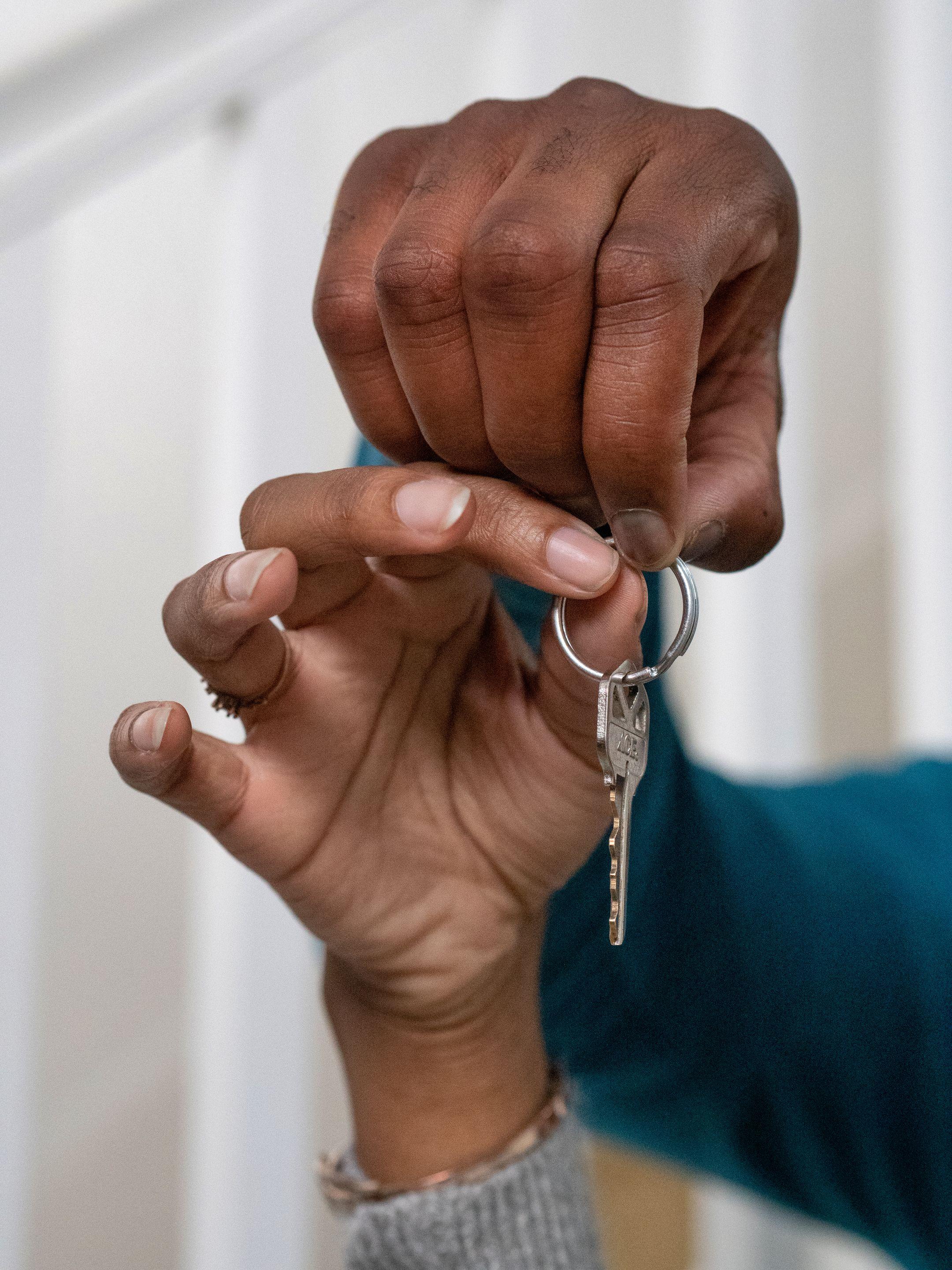
The single biggest thing standing between a Louisville renter and a Louisville homeowner usually isn't income — it's the cash needed to close. Kentucky and Louisville Metro both run real down payment assistance programs, and most people qualify for more help than they think. Here's what's actually available in 2026, what it costs long-term, and how the programs differ.
Kentucky Housing Corporation (KHC): up to $12,500
KHC's Down Payment Assistance program is available to anyone who qualifies for a KHC first mortgage — conventional, FHA, VA, or USDA — through a KHC-approved lender. It provides up to $12,500, in $100 increments, toward your down payment, closing costs, and prepaid items.
The important thing to understand: this is not a grant. It's a second mortgage, repaid to KHC over 15 years alongside your first mortgage. That payment gets counted in your debt-to-income ratio, which can affect your maximum purchase price. The balance comes due in full when you sell, refinance, or otherwise pay off the home — it doesn't just disappear.
- Credit score: 660 minimum for KHC's Conventional Preferred program; 620 for FHA, VA, and USDA-backed KHC loans.
- Purchase price limit: $510,939 across KHC's loan programs.
- Income limits: vary by county and program — a KHC-approved lender confirms your specific limit.
Exact current interest rates and payment schedules change with the market, so get those numbers directly from a KHC-approved lender rather than relying on a number you saw somewhere online — including this page.
Louisville Metro's own Down Payment Assistance Program: up to $30,000, partially forgivable
Separate from KHC, Louisville Metro Government runs its own program for low- to moderate-income buyers, and it works very differently. It provides up to 20% of the purchase price, capped at $30,000, as a 0% interest, partially forgivable loan — not a grant, but far more forgiving than a standard second mortgage.
Stay in the home as your primary residence for 5 to 10 years (the exact requirement depends on the assistance amount) and 50% of the loan is forgiven. The remaining balance comes due if you sell before then.
- Who qualifies: first-time and repeat buyers who don't currently own a home, at or below 80% of area median income — roughly $55,450 for one person up to about $104,550 for an 8-person household, scaling in between.
- Purchase price caps: $260,000 for an existing home, $331,000 for new construction.
- Requirements: a private home inspection and at least 6 hours of HUD-approved homebuyer counseling before closing.
- How to apply: through Louisville Metro's Neighborly portal, which reopens for applications on August 17, 2026. Metro allows about 45 days to review and verify an application before issuing an eligibility letter.
Because this is a Louisville Metro program with its own income and price limits, it's a different pool of money than KHC's statewide DAP — talk to your lender about which one fits your specific purchase, and whether your deal even qualifies for Metro's tighter price caps given where Louisville prices have moved.
Beyond Louisville: what's available elsewhere in Kentucky
If you're buying outside Jefferson County, a few other Kentucky cities run their own local assistance on top of what KHC offers statewide:
- Lexington: nonprofit-administered assistance, including non-repayable subsidies and low-interest (0–2%) loans through organizations like Reach, Inc. and Habitat for Humanity.
- Bowling Green: a Housing Choice Voucher Homeownership Program through HANDS, Inc., which lets an existing Section 8 voucher holder apply their voucher toward a mortgage payment instead of rent.
Can you combine more than one program?
Sometimes, but not automatically, and it depends on the specific programs, your lender, and your purchase. KHC's DAP is built to layer under a KHC first mortgage; Louisville Metro's program is its own separate pool of city funds with its own rules and isn't designed around a KHC loan. Whether a particular combination works for your specific purchase is a lender question, not something to assume from an article — including this one. A KHC-approved lender or a HUD-approved housing counselor can tell you definitively what stacks for your deal.
What this actually means for a Louisville buyer
Between KHC's $12,500 and Louisville Metro's $30,000 program, a qualifying buyer can realistically have access to real five-figure help toward getting into a home — money that, for a lot of renters, is the entire gap between "someday" and an actual closing date. The programs have real strings attached (repayment terms, occupancy requirements, income and price caps), so they're worth understanding in detail rather than assuming they work like a grant. That's exactly the conversation to have with an agent and a lender before you start touring homes, not after you've found one.
Frequently asked questions
Is Kentucky's down payment assistance free money?
Not usually. KHC's program is a repayable second mortgage. Louisville Metro's program is better — a 0% loan that's partially forgiven if you stay in the home long enough — but it's still a loan with real terms, not a grant.
Do I have to be a first-time buyer to qualify?
KHC's programs are generally aimed at first-time buyers or those who haven't owned in the last three years, with some exceptions. Louisville Metro's program serves both first-time and repeat buyers who don't currently own a home. Eligibility details vary by program, so confirm with a lender or the Metro housing office.
What credit score do I need?
For KHC, 660 for the Conventional Preferred program and 620 for FHA, VA, or USDA-backed KHC loans. Louisville Metro's program has its own underwriting standards separate from KHC's.
Can I use down payment assistance on any home in Louisville?
Only within each program's price caps. Louisville Metro's program is capped at $260,000 for an existing home and $331,000 for new construction, which rules out a meaningful share of current Louisville listings — KHC's statewide cap is much higher, at $510,939.
How do I find out which programs I actually qualify for?
Start with a KHC-approved lender, who can check your income, credit, and the home's price against every program you might realistically qualify for in one conversation. Winner Realty can point you to lenders who work with these programs regularly.