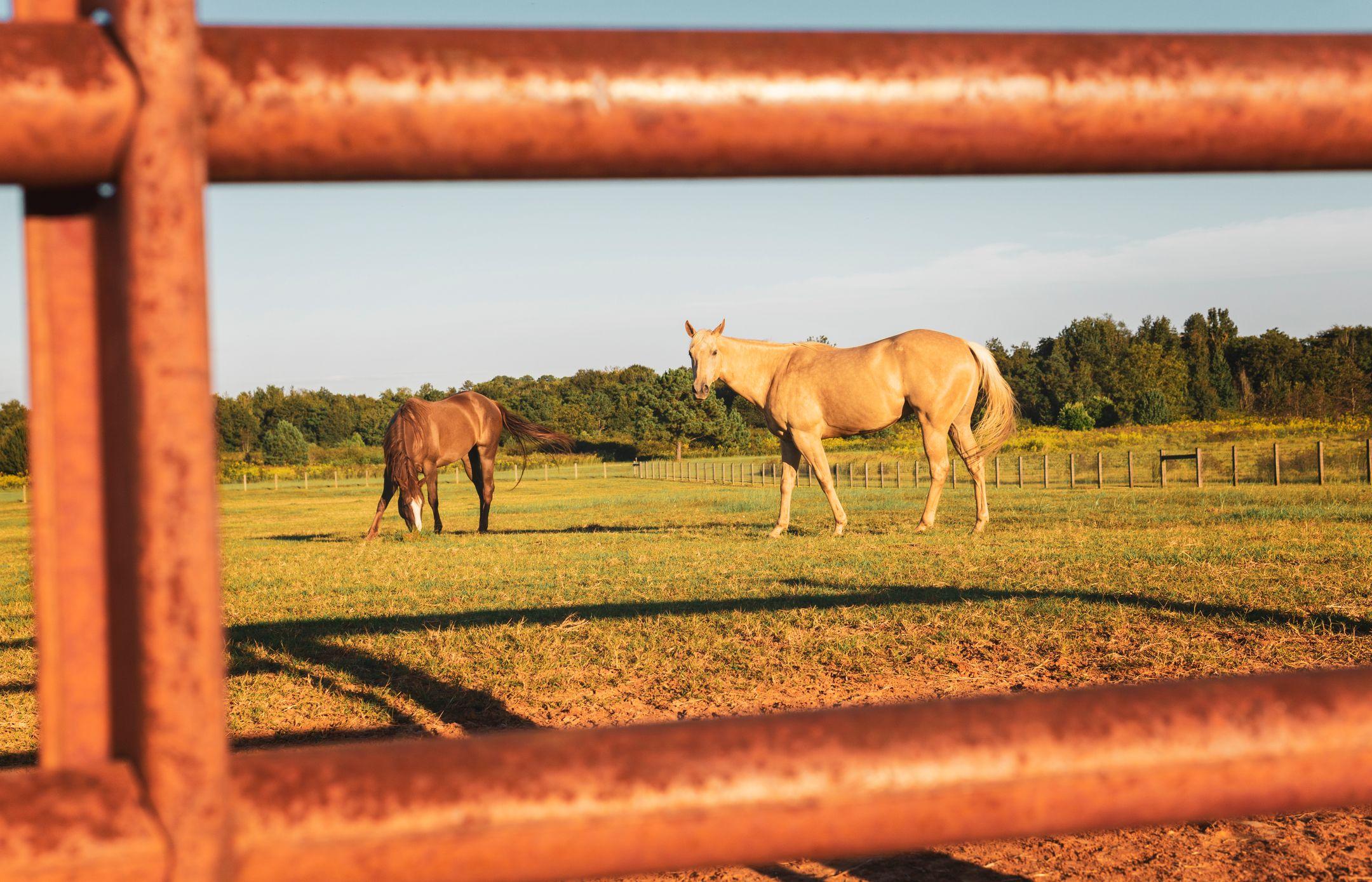
Fayette County is horse country — the working core of the Kentucky Bluegrass, home to some of the most valuable agricultural land in North America. This guide covers Fayette County the way a horse farm or bluegrass estate buyer needs to see it: the rural perimeter outside Lexington's urban core, protected by one of the oldest land-use boundaries in the country. If you want the city itself — neighborhoods, downtown, urban living — see our Lexington, KY City Guide instead.
Fayette County and Lexington aren't quite the same real estate story
Lexington and Fayette County have shared a consolidated government since 1974, which leads a lot of out-of-market buyers to assume "Lexington" and "Fayette County" mean the same real estate. They don't. In 1958, Lexington-Fayette became the first place in the nation to adopt an Urban Service Boundary — a legal line separating the urban area, where city services and development are concentrated, from a protected Rural Service Area outside it. The boundary was expanded once, in 1996, by about 4,200 acres, and roughly 70% of Fayette County's total land area still sits outside it today. That Rural Service Area is where the limestone-rich soils of the Inner Bluegrass Region support both bourbon corn and the water quality that Thoroughbred breeders will tell you is essential to strong bone development in racehorses. It's a working landscape, not just scenery, and it's estimated to generate on the order of $2 billion a year for the local economy.
The bluegrass horse farm market
A quick note on data: Fayette County's horse farm and rural land market is served primarily by Lexington's own Imagine MLS, not the Louisville MLS system most of our other county guides draw on — so the handful of listings visible on the Louisville side aren't representative of the full market. Aggregate land-market data instead: as of recent tracking, Fayette County had roughly 156 rural and farm properties on the market representing over $542 million in combined value across about 5,512 acres — an average north of $98,000 per acre, though that blends everything from smaller rural tracts to elite training operations. Individual working horse farms in the county have traded anywhere from the high six figures for smaller parcels up into eight figures for large, historic Thoroughbred operations. Because Rob Bergeron holds direct access to Imagine MLS in addition to his statewide Kentucky license, Winner Realty can pull current, accurate Fayette County farm listings directly rather than relying on cross-MLS visibility — ask for a live search rather than trusting aggregated web estimates for any specific property.
The famous roads
Fayette County's horse farm identity is built along a handful of scenic corridors, each with its own character:
- Paris Pike (US-27/68): Perhaps the most photographed stretch of horse country in America, lined with iconic stone fences and major Thoroughbred operations toward the Bourbon County line.
- Old Frankfort Pike: A National Scenic Byway running northwest toward Franklin County, dense with historic farms and rolling pasture.
- Versailles Road (US-60): The corridor toward Woodford County and the Keeneland/horse-park area, mixing farms with newer commercial development closer to town.
- Iron Works Pike: Runs past the Kentucky Horse Park, historically one of the most concentrated stretches of working farms in the county.
Price bands and what they buy
Under $1,000,000: Smaller rural acreage, non-horse country homes on a few acres, and entry-level land parcels outside the Urban Service Boundary.
$1,000,000–$3,000,000: Working horse farms of meaningful size — barns, fencing, and pasture suited to a small breeding or training operation.
$3,000,000+: Elite Thoroughbred farms and historic bluegrass estates, often with significant frontage on Paris Pike, Old Frankfort Pike, or Versailles Road.
What buyers should know
Zoning is genuinely restrictive by design. Land in the Rural Service Area typically falls under the county's Agricultural Rural (A-R) zone, which sets minimum acreage requirements specifically to prevent subdivision and sprawl into the protected countryside — this is a feature, not a bug, for buyers who want the horse-country character to stay intact, but it does limit how a rural parcel can be divided or developed. Lexington also runs a long-standing Purchase of Development Rights (PDR) program that pays farm owners to permanently retire development rights on qualifying land; a farm's PDR status (or eligibility) is worth checking before you buy.
Property taxes are notably low for the region. Lexington-Fayette's property tax rate runs around 0.89% of assessed value — lower than Bullitt County's roughly 1.17% and Jefferson County's typical 1.10–1.25% range. Always confirm the current rate for a specific property with the Fayette County PVA.
Schools are strong, if that matters for the property. Fayette County Public Schools carries an overall A− rating, ranked 16th out of 158 Kentucky districts and rated the top district in the Lexington area, and is the 2nd-most diverse school district in the state. Most horse farm buyers aren't optimizing for school zoning the way a subdivision buyer would, but it's a strong district if a farm purchase also means relocating a family.
Rural infrastructure varies by property. Well and septic are common outside the Urban Service Boundary, and older farms may carry easements, shared driveways, or agricultural leases that need to be understood before closing — a rural-specific title and survey review matters more here than on a standard residential purchase.
What sellers should know
Working horse farms and bluegrass estates are a specialized market with a smaller, more targeted buyer pool than standard residential real estate — marketing timelines can run longer, and the right buyer is often found through bloodstock and equestrian industry connections rather than the general market. Accurate, farm-specific comps (not standard residential comps) and a listing agent who understands both the real estate and the equine side of a sale matter more here than almost anywhere else in Kentucky real estate.
How far is this from Louisville?
Lexington sits roughly 75–80 miles east of Louisville via I-64, typically about a 1 hour 15 minute drive outside of rush hour. That's too far for a daily commute, but well within range for Louisville-based buyers treating a Fayette County property as a second home, an investment, or a full relocation into the bluegrass region.
Fayette County vs. the city of Lexington
If you want the urban side of the market — downtown, established neighborhoods, condos, and city living — see our Lexington, KY City Guide. If acreage and rural land near Louisville itself (not Lexington) is the goal, our Farms, Land & Acreage hub covers Oldham, Shelby, Bullitt, and Spencer counties.
Frequently asked questions
Is Fayette County the same thing as Lexington?
They share one consolidated government, but not the same real estate market. About 70% of Fayette County sits outside Lexington's Urban Service Boundary in a protected rural area — that's where the horse farms are. Our Lexington City Guide covers the urban side separately.
What is the Urban Service Boundary?
A legal boundary adopted in 1958 — the first of its kind in the nation — separating Lexington's urban development area from a protected Rural Service Area outside it. It was expanded once, in 1996, and exists specifically to keep the Bluegrass Region's farmland and horse country from being subdivided into suburban sprawl.
How much does horse farm land cost in Fayette County?
Rural and farm land in the county has recently averaged roughly $98,000 per acre in aggregate, though individual working farms range from the high six figures for smaller parcels to eight figures for large, historic Thoroughbred operations. Because this market is served primarily by Lexington's Imagine MLS rather than the Louisville MLS, a direct current search is far more reliable than any web-aggregated estimate.
Are Fayette County schools good?
Yes — Fayette County Public Schools carries an overall A− rating, ranked 16th out of 158 Kentucky districts and the top-rated district in the Lexington area.
How far is Lexington from Louisville?
About 75–80 miles via I-64, roughly a 1 hour 15 minute drive outside of rush hour — too far to commute daily, but a realistic distance for a second home, investment property, or full relocation.
Does Winner Realty actually work in the Lexington/Fayette County market?
Yes. Rob Bergeron is licensed statewide in Kentucky, not just in the Louisville area, and holds direct access to Imagine MLS, the Lexington market's own MLS system, in addition to Louisville MLS. This is a genuine expansion market for Winner Realty, not just a referral pass-through.
Talk to Winner Realty about Fayette County
Rob Bergeron is licensed statewide in Kentucky and has direct access to Imagine MLS for the Lexington and Fayette County market — whether you're evaluating a working horse farm, a bluegrass estate, or rural acreage outside the Urban Service Boundary. Schedule a call with Winner Realty to talk through the market, the zoning, and what a specific property actually looks like on paper.