Updated September 2026. Written by Rob Bergeron, Owner–Realtor at Winner Realty, a Louisville brokerage licensed in Kentucky and Indiana. Every number on this page has a source and a date, because if you are thinking about moving here you deserve real figures, not brochure copy.
I get some version of the same phone call every week: someone has a job offer, a spouse's transfer, or just a plan to leave a more expensive city, and they want to know what Louisville is actually like before they book a flight. So I put together the list I actually tell them, in the order I tell it, starting with the big picture and working down to the details that only matter once you are here. I have sold real estate in this city since 2013. Nothing below is a sales pitch for a neighborhood; it is what I would tell a friend, with the sources attached so you can check it yourself. If you want the full data-heavy version with every number in one place, that lives on our Relocating to Louisville page. This one is meant to be read start to finish, or jumped around in.
Jump to a chapter:
- 1. Louisville Feels Like a Big City With a Small-Town Pace
- 2. The Job Market and Economy Are Bigger Than Most People Expect
- 3. Cost of Living and Housing Depend on Where You're Coming From
- 4. Louisville Neighborhoods Have Very Different Personalities
- 5. Schools Are a Major Part of the Louisville Home Search
- 6. Louisville, Southern Indiana, and Lexington Are Different Kentucky-Area Markets
- 7. Louisville Weather Gives You Four Real Seasons
- 8. Pollen and a Few Bugs Come With the Territory
- 9. Louisville's Food Scene Punches Way Above Its Weight
- 10. Bourbon and Nightlife Are a Bigger Deal Than You'd Guess
- 11. Parks and Outdoor Space Are a Genuine Louisville Advantage
- 12. Arts, Culture, and Museums Are Stronger Than Newcomers Expect
- 13. Derby and Sports Culture Run Deep
- 14. Traffic, Commuting, and Getting Around Depend on Your Route
- 15. Safety Should Be Checked by Address, Not by Reputation
- 16. Healthcare Is One of Louisville's Real Strengths
- 17. Day Trips Put Nashville, Cincinnati, Indianapolis, and Bourbon Country Within Reach
- 18. Growth and Development Are Changing Louisville Fast
- 19. Moving Logistics Are Easier When You Handle Them Early
1. Louisville Feels Like a Big City With a Small-Town Pace
Louisville is the largest city in Kentucky, with a metro population of about 1,396,762 (Census ACS 2024). That puts it in the same population range as metros like Nashville and Raleigh, but it does not feel like a metro of that size once you are living in it. The airport is ten minutes from downtown. The typical one-way commute is about 24 minutes (Census ACS 2024). You can get a table at most restaurants on a Tuesday without a reservation, and you can also get James Beard–recognized food, a AAA-rated symphony, and an ACC basketball program in the same zip code. Louisville sits where Kentucky meets Southern Indiana on the Ohio River, and that river geography shapes almost everything else on this list, from the neighborhoods to the weather to the flood maps I pull on every property before a client writes an offer.
What surprises transplants most is not any single fact but the combination: a city with a real, diversified job market and a real cultural calendar, at a pace and a price point that a lot of larger metros gave up years ago. People who move here from Chicago, Denver, Northern Virginia, or the coasts tend to use the same word for it after six months, which is relief — less time in the car, more house for the money, and a downtown and a set of neighborhoods you can actually get to know instead of just commute through. That does not mean Louisville is without trade-offs, and I will get to those directly: humid summers, real pollen seasons, and a public transit system that will not replace a car. But the day-to-day rhythm of living here, for most people relocating from a bigger or pricier market, is the first thing they notice and the last thing they miss when they travel.
2. The Job Market and Economy Are Bigger Than Most People Expect
Louisville's economy is built on logistics, healthcare, manufacturing, and bourbon, and it is more diversified than its size would suggest. UPS Worldport, at Louisville Muhammad Ali International Airport, is the largest fully automated package-handling facility in the world, and its presence has pulled Amazon and a long list of e-commerce and medical-distribution companies into the region around it. Ford runs two plants here, the Kentucky Truck Plant and the Louisville Assembly Plant. GE Appliances is headquartered at Appliance Park. Humana is headquartered downtown, and Norton Healthcare, UofL Health, and Baptist Health together make healthcare the largest private employment sector in the metro. Louisville is also a national hub for the senior-living and aging-care industry; companies like Kindred, Atria, and Signature got their start here.
On the manufacturing and consumer side, Yum! Brands and Brown-Forman (Jack Daniel's, Woodford Reserve, Old Forester) are headquartered in Louisville, and Papa John's was founded just across the river in Jeffersonville, Indiana. The University of Louisville is both a major employer and a research institution, and the median household income across the metro was $74,305 as of the 2024 Census ACS estimate. Median household income tells you less than the number one thing I ask every relocating client: which employer, or which industry, are you coming for? The commute, the neighborhood shortlist, and even the school-district research change depending on whether you are headed to a UPS or Ford shift, a downtown Humana or Brown-Forman office, a hospital system, or a fully remote setup. Tell us the employer and we build the shortlist around it, not the other way around.
3. Cost of Living and Housing Depend on Where You're Coming From
The single most useful number I can give a relocating buyer is this: the median single-family home in Jefferson County sold for $290,000 in August 2026 (Louisville MLS), against a national median existing-home price of $434,100 (National Association of REALTORS®, July 2026). Louisville's overall cost of living runs about 9 percent below the national average, with housing 26 percent below and utilities 13 percent below (RentCafe, September 2026). Average rent across the metro was about $1,336 a month as of the same report. What that means in practice depends entirely on where you are moving from. A household coming from the Bay Area, New York, Denver, or Northern Virginia tends to be shocked at what the same payment buys here — more square footage, a bigger lot, or a materially shorter commute, and often all three. A household coming from a smaller or already-affordable Midwestern or Southern market sometimes finds Louisville comparable, or even a little more expensive on specific streets close to downtown or the Highlands, though still well under the national median overall.
Kentucky's flat income tax dropped to 3.5 percent on January 1, 2026, down from 4 percent (House Bill 1, 2025 session). Sales tax is a flat 6 percent statewide with no local add-ons, which surprises people used to register totals of 9 or 10 percent. Closing costs for a buyer typically run 2 to 3 percent, and Kentucky's real estate transfer tax, $0.50 per $500 of value, is paid by the seller, so it does not come out of a buyer's pocket. Gas was about $2.82 a gallon in September 2026. The category that catches transplants off guard is Kentucky's annual property tax on vehicles, paid at registration renewal through the county clerk; there is no annual vehicle safety or emissions inspection to offset it. I walk every out-of-state client through a real monthly-cost comparison using their actual current bills, not a national cost-of-living index, because the index rarely matches what a specific household actually spends.
4. Louisville Neighborhoods Have Very Different Personalities
A note on how I write about neighborhoods, because it matters and because it is both the law and the more useful way to choose a home: I describe housing stock, price range, commute, and what is physically there. I do not rank neighborhoods, and I would encourage you to be careful with any agent who does. Here is a factual snapshot by area.
- The urban core (the Highlands, Old Louisville, Germantown/Schnitzelburg, Butchertown/NuLu, Clifton/Crescent Hill): early-1900s homes, shotgun houses, Victorian-era buildings, and newer lofts and townhomes on small, walkable lots, generally within a ten- to fifteen-minute drive of downtown. Prices span condos in the low $200,000s to large single-family homes well past $700,000, depending on the specific block.
- The east-central suburbs (St. Matthews, Lyndon, Hikes Point, Bon Air, Jeffersontown, Middletown): mostly 1940s-to-2000s brick homes, ranches, and split-levels on quarter-acre-plus lots, close to the Watterson Expressway (I-264), typically in the mid-$300,000s to mid-$400,000s.
- The far east end and Oldham County (Norton Commons, Prospect, Glenview, Indian Hills, Springhurst, La Grange, Crestwood): newer construction, larger lots, and some of the highest price points in the metro; Oldham County's median sale was around $450,000 in August 2026, with a 25- to 40-minute commute to downtown.
- South and southwest Jefferson County and Bullitt County (Fern Creek, Okolona, Highview, Pleasure Ridge Park, Valley Station, Fairdale, Shepherdsville, Mount Washington): ranches and two-stories on larger-than-average lots, close to the airport, UPS Worldport, and the Ford plants; Bullitt County's median sale was about $307,500 in August 2026.
- The west end (Portland, Shawnee): the city's oldest housing stock and lowest entry price points, along the river with Shawnee Park, and a documented wave of waterfront investment underway.
Every one of these areas has a public safety record and a school assignment you can look up for a specific address, which I cover in the next two chapters. My job is to match your commute and your budget to the physical facts on the ground; your job is to visit, drive the commute at rush hour, and pull the same public data I would pull for you.
5. Schools Are a Major Part of the Louisville Home Search
I do not rate or rank schools, and I would encourage you to be cautious with any agent who does. What I can do is explain how the systems are organized so you can research a specific address yourself. Jefferson County Public Schools (JCPS) is one of the larger public school districts in the country and uses a student assignment plan that is not purely neighborhood-based, so the school assigned to a given address is something you look up on the JCPS website, not something you assume from a map. Oldham County, Bullitt County, and Shelby County each operate their own independent districts outside Jefferson County. The Archdiocese of Louisville runs one of the larger Catholic school systems in the country, and there are several independent schools as well. Kentucky publishes an official School Report Card for every public school in the state, which is a public data source, not our opinion.
Across the river, Greater Clark County Schools and New Albany–Floyd County Consolidated Schools are the two large Indiana school corporations serving Southern Indiana, and Indiana publishes its own school report cards. For higher education, the metro includes the University of Louisville, Bellarmine University, Spalding University, Sullivan University, Jefferson Community and Technical College, and Indiana University Southeast in New Albany. When you send us the addresses on your shortlist, we send back the official JCPS or county boundary map, the Kentucky School Report Card link, and the GreatSchools.org listing for that specific address — the same links we send every client, with no editorializing added.
6. Louisville, Southern Indiana, and Lexington Are Different Kentucky-Area Markets
People often lump "the Louisville area" together, but it is really three or four distinct markets with different tax structures and different commutes, and the math is closer than the folklore in most cases. Southern Indiana — Jeffersonville, New Albany, Clarksville, Sellersburg, and Floyds Knobs — is five to twenty minutes from downtown Louisville across the river, and two of the five bridges (the Sherman Minton on I-64 and the Clark Memorial on US 31) are free, with the other three tolled at a little over $2 per crossing with a RiverLink transponder. Indiana's flat state income tax is 2.95 percent for 2026, but every Indiana county layers on its own income tax: 2.0 percent in Clark County, 1.89 percent in Floyd County, and 1.0 percent in Harrison County. If you live in Indiana and work in Louisville, Kentucky's 1.45 percent non-resident occupational tax still applies to those wages, because the Kentucky–Indiana reciprocity agreement covers state income tax, not the city's occupational tax. Where Indiana wins clearly is property tax: the state constitution caps a homestead's property tax at 1 percent of gross assessed value. Indiana's sales tax is 7 percent versus Kentucky's 6.
Lexington, about 75 minutes east on I-64, is Kentucky's second-largest city and a distinctly different market: it is home to the University of Kentucky and the Thoroughbred industry, including Keeneland and the horse farms along Old Frankfort Pike, and Toyota's largest North American plant sits nearby in Georgetown. Lexington operates under an urban growth boundary, which keeps its housing supply tighter than Louisville's and tends to push prices for comparable homes somewhat higher; the city also levies its own 2.25 percent occupational tax. Because Winner Realty is licensed in both Kentucky and Indiana, we can run a real comparison — on your actual salary and your actual target home — for Louisville versus Southern Indiana. For Lexington and the rest of the state, see our companion guide, Relocating to Kentucky, and our new 19 Things to Know Before Moving to Lexington.
7. Louisville Weather Gives You Four Real Seasons
Louisville has four distinct seasons, and I would rather describe them plainly than sell you on them. Summers are hot and humid, with July highs typically in the upper 80s and stretches into the 90s; the Ohio River valley humidity is the part that surprises people moving from drier climates more than the temperature itself. Winters are mild by Midwestern standards, with January lows in the mid-20s, roughly a foot of snow across the whole season, and usually one or two ice events that shut the city down for a day at a time rather than a week. Spring and fall are the payoff: long, mild, and green, and the reason a lot of transplants tell me the seasons themselves were a factor in staying.
Spring also brings the region's thunderstorm season, with real but modest tornado risk, and I mention it because it is a genuine part of living in the Ohio Valley, not a scare tactic. Parts of the metro sit in the Ohio River and Beargrass Creek floodplains, which is why I pull the FEMA flood map on every property before a client writes an offer, regardless of how far the house looks from water on a normal day. If you want the longer history of how the 1937 flood shaped which Louisville and Southern Indiana neighborhoods exist at all, I wrote it up here: Written in the Rock. None of this is unusual for a river city; it is simply worth knowing before you buy rather than after.
8. Pollen and a Few Bugs Come With the Territory
This is a river valley full of hardwood forest, and that has consequences. Tree pollen is heavy in April and May, and it is one of the two things transplants consistently say they underestimated, right alongside the summer humidity. If you or a family member deals with seasonal allergies, budget for a rough month or two in spring, particularly if you are moving from a drier or less forested region. Kentucky sits within the range of several broods of periodical cicadas; Brood XIV had its large regional emergence across parts of Kentucky in spring 2025 (University of Kentucky Department of Entomology), so the next mass emergence in this specific area is well over a decade out, though the ordinary annual "dog-day" cicadas that buzz every August are unrelated and show up every summer without fail.
The more routine seasonal pest here is the brown marmorated stink bug, which moves indoors looking for warmth as fall temperatures drop and is a common nuisance across Kentucky homes in October and November (Kentucky pest-control industry reporting, 2025–2026). Standard sealing around windows, doors, and utility penetrations handles most of it, and it is the kind of thing a home inspector will flag if it is a recurring issue at a specific property. None of this is unique to Louisville — it is standard for the broader Ohio Valley and Southeast — but it is worth knowing rather than discovering in your first October here.
9. Louisville's Food Scene Punches Way Above Its Weight
Three restaurants in the metro were named 2026 James Beard Award semifinalists: MeeshMeesh in NuLu (Noam Bilitzer, Best Chef: Southeast, his second consecutive year on the list), Watch Hill Proper in Norton Commons (Outstanding Bar), and Red Yeti in Jeffersonville, Indiana (Michael Bowe, Best Chef: Great Lakes). That is a real, sourced marker of a food scene, not a marketing claim. The city's longtime institutions are still standing and still full: Jack Fry's has been on Bardstown Road since 1933, 610 Magnolia in Old Louisville anchors the tasting-menu end of the market, and the Brown Hotel downtown still serves the Hot Brown open-faced sandwich it invented in 1926.
What makes the scene deep rather than just decorated at the top is everything underneath that tier: Vietnam Kitchen in the Iroquois Manor area, the Mayan Café in NuLu, Hammerheads in Germantown, Bourbons Bistro on Frankfort Avenue, a long run of taquerias along Preston Highway, and the Logan Street Market and Butchertown Market food halls, which put a dozen-plus independent vendors under one roof. Neighborhood commercial strips like Bardstown Road, Frankfort Avenue, East Market Street in NuLu, and Preston Highway each carry their own concentration of restaurants, so a lot of house-hunting conversations here turn into a conversation about which strip you want to be able to walk to. I keep a running list for clients based on what they actually eat, not a generic "best of" roundup, because those roundups change every year and the answer to "where do you actually eat" does not.
10. Bourbon and Nightlife Are a Bigger Deal Than You'd Guess
The large majority of the world's bourbon supply is made in Kentucky, and downtown Louisville has a walkable string of working distilleries and tasting experiences on the Urban Bourbon Trail: Evan Williams, Old Forester, Angel's Envy, Rabbit Hole, and Michter's Fort Nelson are all within blocks of each other downtown and in NuLu. Most locals take visiting family and friends on this circuit at least once, and then quietly keep going back themselves. Thirty minutes southeast, Bardstown carries the title "Bourbon Capital of the World" and is where a large cluster of the Kentucky Bourbon Trail's distilleries sit, connecting Louisville through to Lexington.
Beyond bourbon specifically, the nightlife pattern here follows the neighborhoods rather than concentrating in one entertainment district. Bardstown Road and Baxter Avenue in the Highlands carry the highest density of independent bars and restaurants in the state, and Germantown and Schnitzelburg, just west, are known for a bar on nearly every corner in a compact, walkable footprint. NuLu and East Market Street pair restaurants with cocktail bars and galleries that stay active into the evening, and downtown's Fourth Street Live entertainment district and the riverfront both draw crowds on weekends and during festival season. Two of the country's larger annual music festivals, Bourbon & Beyond and Louder Than Life, run back-to-back at the Kentucky Exposition Center every September and draw national touring lineups plus a heavy local turnout.
11. Parks and Outdoor Space Are a Genuine Louisville Advantage
Louisville is one of only a few American cities with a complete park system designed by Frederick Law Olmsted, the same landscape architect behind Central Park: 18 parks connected by six parkways, anchored by Cherokee Park in the Highlands, Iroquois Park in the south end with its hilltop overlook, and Shawnee Park on the river in the west end. The modern additions are just as significant in scale. The Parklands of Floyds Fork is about 4,000 acres of connected parkland along the eastern side of the county, with paved loop trails and paddling access, and free admission. Jefferson Memorial Forest covers 6,676 acres with nearly 60 miles of trail, making it one of the larger municipal urban forests in the United States, and it sits about twenty minutes from downtown.
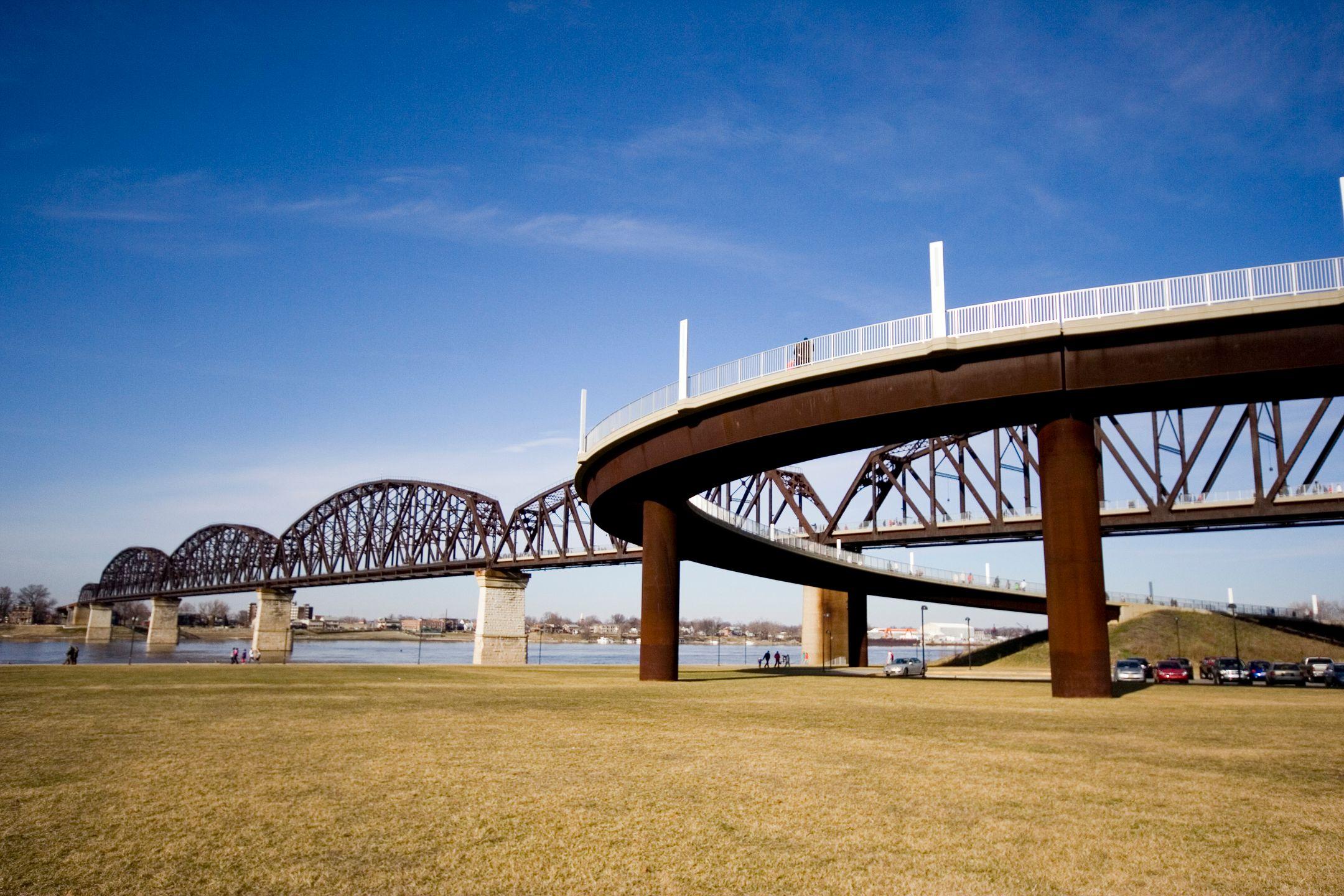
Waterfront Park is 85 acres on the Ohio River downtown, connected to Jeffersonville, Indiana, by the Big Four pedestrian bridge, and it hosts most of the city's free concerts and festivals, including the summer Waterfront Wednesday concert series. The Louisville Loop is a planned 100-mile paved trail circling the entire county, with roughly a third of it built out so far. Thirty minutes south of the city, Bernheim Forest is over 16,000 privately held acres open to the public. And Louisville Mega Cavern, an underground bike park and zip-line course built inside a former limestone mine, is exactly as unusual as it sounds. For households moving from a market where outdoor access means driving an hour to a state park, having this much connected green space inside the city limits is one of the more concrete quality-of-life differences buyers notice within their first few months.
12. Arts, Culture, and Museums Are Stronger Than Newcomers Expect
The Speed Art Museum, founded in 1927, is Kentucky's oldest and largest art museum, and it sits next to the University of Louisville's Belknap Campus. A few blocks away downtown, the Muhammad Ali Center, which opened in 2005, tells Ali's life story alongside a broader set of exhibits on respect, confidence, and social change; it draws visitors from well beyond the region. KMAC Museum, the Kentucky Museum of Art and Craft, sits on Main Street in the same downtown museum corridor as the Frazier History Museum and the Louisville Slugger Museum & Factory. The Louisville Orchestra performs its regular season at the Kentucky Center for the Performing Arts downtown, and Actors Theatre of Louisville, designated the State Theatre of Kentucky, has run the Humana Festival of New American Plays since the 1970s, a program that has premiered new American plays that went on to national and international productions.
Beyond the anchor institutions, the calendar runs deep: the St. James Court Art Show fills the streets of Old Louisville every October with one of the larger outdoor art fairs in the country, the Kentucky Science Center and the Louisville Zoo round out the family-oriented end of the cultural map, and smaller galleries cluster along East Market Street in NuLu and on Frankfort Avenue in Clifton. For a metro of Louisville's size, having a museum-and-performing-arts core this dense, concentrated within a few walkable downtown blocks, is not something every comparable city can claim, and it is a regular reason transplants cite for staying past the first year.
13. Derby and Sports Culture Run Deep
The Kentucky Derby runs the first Saturday in May, and the city treats the two weeks leading up to it as an extended civic holiday. Thunder Over Louisville, the air show and fireworks display that kicks off the Derby Festival, is one of the larger annual fireworks shows in North America, followed over the following weeks by the balloon race, the steamboat race, the Pegasus Parade, and the Kentucky Oaks on the Friday before Derby itself. If you are house-hunting in April, expect the calendar, and some parking and traffic patterns near Churchill Downs, to reflect it.
Outside of Derby season, sports culture here is a year-round thread. The University of Louisville Cardinals compete in the ACC, playing basketball at the KFC Yum! Center downtown and football at L&N Federal Credit Union Stadium, and the annual football and basketball games against the University of Kentucky divide households across the state. Louisville City FC (USL Championship) and Racing Louisville FC (NWSL) both play at Lynn Family Stadium in Butchertown, a soccer-specific venue that opened in 2020 and has become a genuine gathering point for the neighborhood around it on game nights. Between Derby, college sports, and professional soccer, sports here function less like entertainment and more like a shared civic calendar that shapes weekend plans across the whole metro.
14. Traffic, Commuting, and Getting Around Depend on Your Route
Three interstates meet in Louisville: I-64 running east-west, I-65 running north-south, and I-71 heading toward Cincinnati. The Watterson Expressway (I-264) functions as the inner loop and the Gene Snyder Freeway (I-265) as the outer loop, and most of the metro is within about 25 minutes of downtown in normal traffic. The Census puts the average one-way commute at roughly 24 minutes (Census ACS 2024). Bridges matter here in a way they do not in most cities: the Kennedy and Lincoln bridges on I-65 and the Lewis and Clark Bridge on the east end are tolled, while the Sherman Minton (I-64) and the Clark Memorial (Second Street) bridges are free, which is a real factor if your commute crosses into Southern Indiana daily.
Louisville Muhammad Ali International Airport (SDF) sits about ten minutes south of downtown and had a record 41 nonstop destinations as of 2026, including newer service to markets like Los Angeles, Pittsburgh, and Hartford. Security lines run short enough that locals routinely leave home 50 minutes before a flight. TARC operates the city's bus system, but there is no rail transit and no Amtrak service, so plan on owning a car unless you are settling into the Highlands, NuLu, or downtown, where walkability covers a meaningful share of daily errands. Louisville is a workable cycling city on the parkways and the Louisville Loop, and a rougher one on the busier arterial roads, which is worth test-driving before you commit to a bike-first commute.
15. Safety Should Be Checked by Address, Not by Reputation
I do not rank neighborhoods, areas, or streets by safety, and I would encourage you to be skeptical of any agent, website, or app that hands you a single citywide safety score and calls it settled. Crime statistics are public, address-specific, and they change over time, so a reputation formed years ago, or a reputation formed by one incident that made the news, is not a reliable substitute for current data on the specific block you are considering. Louisville Metro Police Department publishes public crime data and dashboards that anyone can search by address or area. Third-party sites that aggregate this kind of data by address also exist, and I am glad to pull that information for any specific property you are looking at, the same way I pull the FEMA flood map and the school assignment.
My advice to every relocating buyer is the same: do not ask an agent to characterize an area for you in adjectives. Ask for the data, look at it yourself, and then go visit the block at a few different times of day, including an evening, before you write an offer. That combination — public data plus your own eyes on the ground — tells you far more than any ranking ever could, and it is the standard I hold myself to with every client, in every neighborhood we look at together.
16. Healthcare Is One of Louisville's Real Strengths
Healthcare is the metro's largest private employment sector, carried primarily by three systems: Norton Healthcare, Baptist Health, and UofL Health (Norton Healthcare, Baptist Health, UofL Health, 2026). Norton Children's Hospital is the region's dedicated pediatric hospital, serving Kentucky and Southern Indiana. UofL Health operates the academic medical center tied to the University of Louisville, including the region's Level I trauma center designation, which matters for anyone weighing proximity to specialized emergency and trauma care. Baptist Health Louisville rounds out the third major system, part of the broader Baptist Health network across Kentucky and Southern Indiana. Together these systems mean most households relocating here, regardless of neighborhood, are within a reasonably short drive of a full-service hospital and a wide specialist network, rather than routing every serious case to a single regional center.
Louisville's healthcare footprint extends past hospital care into the broader senior-living and aging-care industry, where companies including Kindred, Atria, and Signature originated locally and still maintain a significant regional presence. Humana, headquartered downtown, adds a large health-insurance employment base on top of direct patient care. For relocating households with ongoing medical needs, established specialists, or family members requiring senior care, this is a factor worth weighing early rather than after the move; we are glad to help connect clients to the right system based on their specific medical needs and their target neighborhood's drive time to each.
17. Day Trips Put Nashville, Cincinnati, Indianapolis, and Bourbon Country Within Reach
Louisville's central location is one of its more underrated features, and it is a genuine factor for households that travel for work or want weekend flexibility without booking a flight. Nashville is about a 2.5-hour drive, Cincinnati about 1.5 hours, Indianapolis about 2 hours, and St. Louis about 4 hours. Closer in, Bardstown and the cluster of distilleries that make up the "Bourbon Capital of the World" are about thirty minutes southeast, and the full Kentucky Bourbon Trail continues from there through to Lexington, itself about 75 minutes east on I-64.
Further afield within a comfortable day-trip or overnight range: Mammoth Cave National Park, the longest known cave system in the world, sits roughly 90 minutes southwest near Bowling Green, which is also home to the General Motors plant that builds every Corvette and the National Corvette Museum. Land Between the Lakes, the large recreation area between Kentucky Lake and Lake Barkley, anchors the western part of the state for boating and camping. And Louisville Muhammad Ali International Airport's 41 nonstop destinations mean that for trips beyond a day's drive, you are often not routing through a connecting hub the way you would from a smaller regional airport. For relocating buyers who value being centrally located relative to family, friends, or recurring business travel, this is worth factoring in alongside the more commonly discussed cost-of-living numbers.
18. Growth and Development Are Changing Louisville Fast
Downtown Louisville recorded about $2.5 billion in development investment in 2025 (Louisville Downtown Partnership, 2026 State of the Downtown report), spanning residential conversions, mixed-use projects, and infrastructure work. NuLu, already established as a restaurant and gallery corridor along East Market Street, has continued to add new mixed-use development, including large announced projects that would add residential units, retail, and public space to the district (local development reporting, 2026). The Louisville Downtown Partnership's reporting has also flagged a need for more downtown residential supply specifically, meaning much of the current investment is aimed at converting older office and commercial buildings into housing.
Investment is not confined to downtown and NuLu. The west end waterfront, including the area around Shawnee Park, has seen a documented wave of investment activity in recent years, adding to the neighborhood's existing housing stock without displacing the fundamentals I described in Chapter 4: this remains an area defined by its physical facts, not by a label. For relocating buyers, the practical takeaway is that Louisville's development map is not static. A property's surrounding blocks, nearby retail, and infrastructure can look meaningfully different in three to five years than they do on the day you close, which is one more reason to look at a specific address's permit history and planned nearby projects, not just its current curb appeal, before you commit.
19. Moving Logistics Are Easier When You Handle Them Early
The logistics of an out-of-state move are rarely the hard part emotionally, but they are the part most likely to cause a headache if you leave them until the last week. Utilities are handled by a short, predictable list: LG&E for electric and gas, Louisville Water for water service, MSD for sewer and drainage, plus internet and trash pickup, which runs through Louisville Metro or your specific city's contractor depending on the address (LG&E and KU, 2026). Starting residential service can typically be set up online or by phone before your move-in date, and I recommend doing it as soon as you have a closing date or a lease start date.
On the state side, Kentucky gives new residents 30 days from the date they establish residency to obtain a Kentucky driver's license at a Driver Licensing Regional Office, and vehicles are titled and registered separately at the county clerk's office, where Kentucky's annual vehicle property tax is also collected (Kentucky Transportation Cabinet, DRIVE, 2026). Indiana gives new residents 60 days for the equivalent steps at the BMV. Also worth handling early: registering to vote, transferring prescriptions to a local pharmacy, and, if you or a household member is 65 or older or classified as totally disabled, filing Kentucky's homestead exemption ($49,100 of assessed value for the 2025–2026 period) with the Jefferson County PVA by the December 31 deadline. Closings in Kentucky are handled by a title company or a real estate attorney, and we routinely arrange remote or mobile-notary closings for clients who are not yet in town on closing day. None of this is complicated on its own; it is simply easier to knock out in the 30 to 60 days before your move than to untangle in your first week here, and we send every client the same checklist, with deadlines attached, the day we go under contract.
Two ways to get started
The thirty-second way: email rob@thewinnerrealty.com with your current city, your target month, your budget, and (if you have one) your employer, and you will get a custom neighborhood shortlist with real listings within one business day. No pitch, no drip campaign, just the list.
The fifteen-minute way: schedule a relocation planning call and we will talk through timing, neighborhoods, financing, and whether to buy or rent first, so you leave the call with a plan.
Related guides on this site: Relocating to Louisville · Relocating to Kentucky · Moving to Southern Indiana · 19 Things to Know Before Moving to Lexington · Louisville Housing Market Report · What Is My House Worth in Louisville? · Written in the Rock: A History of Louisville and Southern Indiana · Accessible Real Estate in Louisville · Senior Real Estate Services
Winner Realty is an Equal Housing Opportunity brokerage licensed in Kentucky and Indiana. Rob Bergeron is a licensed Kentucky Realtor (License #219325). Lisa Tucker, Principal Broker. Figures cited from the Louisville MLS (August 2026), the National Association of REALTORS® (July 2026), the U.S. Census Bureau (ACS 2024), RentCafe (September 2026), the Kentucky Department of Revenue, the Indiana Department of Revenue (Departmental Notice #1, January 2026), the Louisville Metro Revenue Commission, the James Beard Foundation (2026), Louisville Muhammad Ali International Airport (2026), the Louisville Downtown Partnership's 2026 State of the Downtown report, the University of Kentucky Department of Entomology (Brood XIV periodical cicada emergence, 2025), Norton Healthcare, Baptist Health, and UofL Health (2026), University of Louisville Athletics, Louisville City FC and Racing Louisville FC, LG&E and KU (2026), the Kentucky Transportation Cabinet's DRIVE program (2026), Jefferson County Public Schools, and the Kentucky Department of Education School Report Card. Prices, rates, and development figures change; verify current figures before making decisions.
Bonus: If an Employer Is Paying for the Move, a Few Things Work Differently
If your move here is being handled by an employer, an HR team, or a relocation management company rather than paid for out of pocket, a few things about the process change. Some companies give a transferee a lump-sum relocation benefit and let them manage the move on their own; others run a fully managed move through an RMC, which assigns vendors — moving company, temporary housing, and a local real estate agent — at each step and expects that agent to work inside its reporting and timeline rather than around it. Either way, you're often house-hunting on a tighter runway than someone moving on their own schedule, sometimes from temporary housing while you look. If your move to the Louisville area is being handled by an employer, HR team, or mobility company, see our corporate relocation services page for how we work with mobility teams and RMC case managers across Louisville, Lexington, and Southern Indiana.